
CityXperiment 2025: Porto as a living laboratory on the road to carbon neutrality
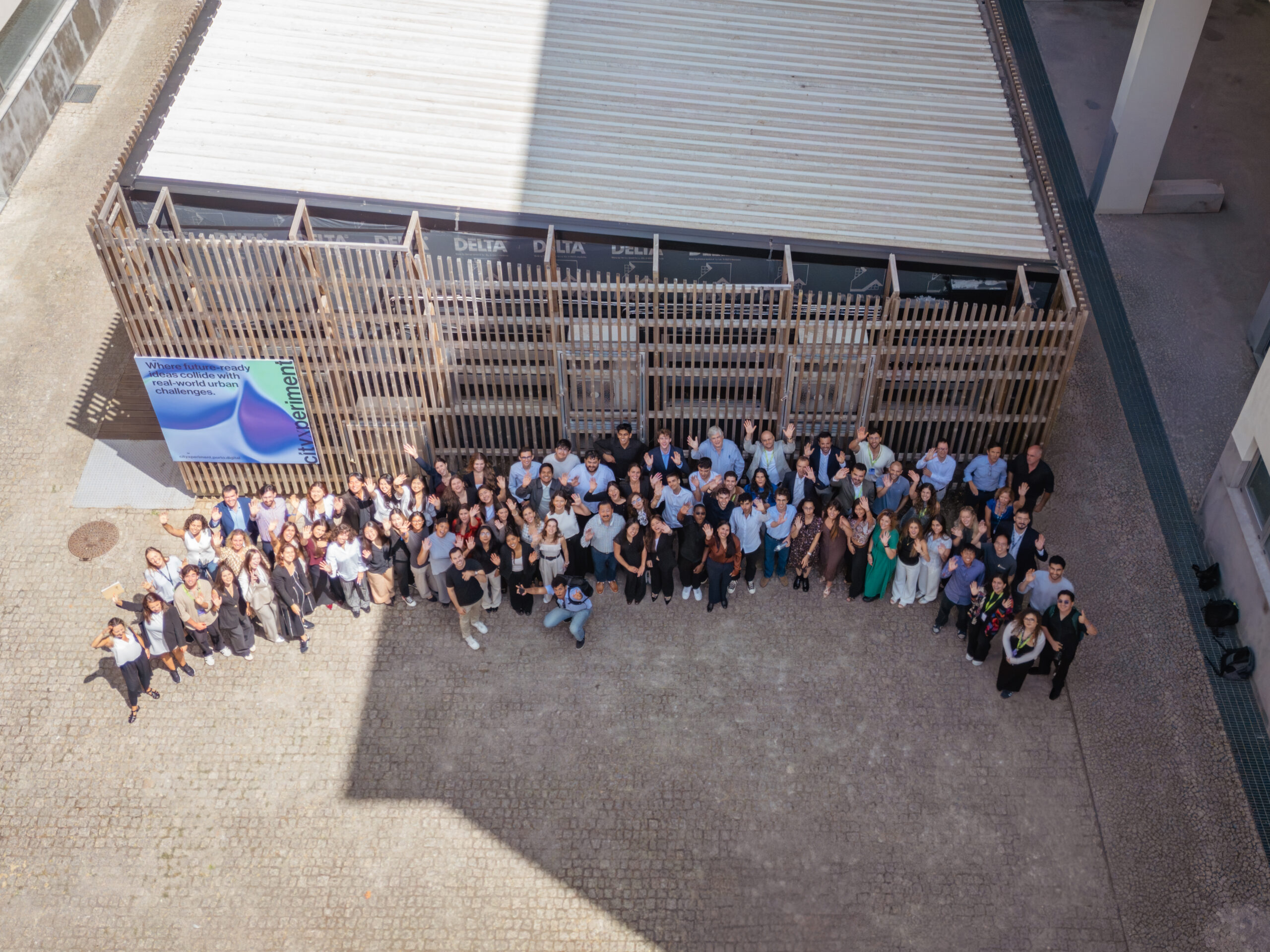
The CityXperiment 2025 program has established itself as a collaborative urban innovation program, aligned with the objectives of the Porto Climate Pact 2030. Over four intensive weeks, around 60 students from the University of Porto and UC Berkeley joined municipal experts, businesses, and academia to co-create practical solutions to real challenges facing the city. The result was action plans ready to be implemented and tested, designed to accelerate Porto’s climate transition and strengthen the culture of urban experimentation in the municipality.
Phased structure: Discover, Design, and Deliver
Designed with an immersive three-phase format, CityXperiment 2025 led participants through successive stages of problem exploration (Discover), solution design (Design), and delivery of a concrete implementation plan (Deliver). After an initial week of leadership and entrepreneurship training — Leadership Week — inspired by the Berkeley method, three weeks followed in which multidisciplinary teams explored, designed, and materialised practical solutions to selected urban challenges.
During these phases, each group was closely monitored by various types of advisors: Sherpas, specialised mentors from Silicon Valley and the University of California, Berkeley; coaches from partner consulting firms; and Clients, who are representatives of the partner companies in this edition of the project. This support ecosystem, which included executives from Deloitte, Capgemini, and EY, ensured that the teams combined global knowledge with the local reality of Porto. It favoured an active method, practical experimentation, and the search for tangible and viable solutions over purely academic approaches.
Methodology focused on real problems and co-created with partners.
A striking feature of CityXperiment 2025 was the collaborative definition of challenges. In a preparatory phase, called Foundations for Impact Week, representatives of local partners met with consultants, sherpas, and the city to identify priority issues and align expectations. This immersive week, held at the Porto Innovation Hub, yielded concrete challenges co-created with partners, ensuring relevance and direct impact on the community.
Each challenge was intrinsically linked to Porto’s carbon neutrality goals, such as the circular economy, mobility, and energy transition, among others. This approach was based on the open innovation methodology, where “action over theory” meant quickly validating ideas in the field, obtaining real feedback from the customer, rather than prolonging theoretical discussions. During the Discover phase, for example, participants immersed themselves in the context of each problem, visiting facilities, talking to stakeholders, and collecting data before moving on to designing solutions.
Two teams per challenge: parallel and complementary approaches
To amplify creativity and diversity of solutions, each challenge had two teams working in parallel. Thus, the five urban problems identified gave rise to ten distinct proposals, materialised in roadmaps ready for execution. In many cases, the teams arrived at complementary or even contrasting solutions to the same problem, enriching the range of possibilities for intervention.
For example, in the challenge proposed by Sonae MC, linked to sustainability in food retail, one team developed an operational improvement plan focused on optimising internal processes and reducing waste in stores, while the other team opted for a behavioural strategy, encouraging changes in customer and employee habits to reduce food waste.
Similarly, in the Lipor challenge, dedicated to urban waste management, one of the teams designed a technological roadmap to optimise waste collection and sorting, while the parallel team outlined community awareness actions to increase recycling rates.
This structure of two teams per problem proved fruitful, generating dialogue between different solutions and offering partners two possible courses of action, sometimes integrated and sometimes distinct alternatives, to achieve the established goals.
Insert video
Examples of urban innovation have been developed.
The projects developed covered a variety of areas critical to Porto’s urban sustainability. In the water and energy sector, with the challenge of Porto’s Water and Energy, the teams proposed everything from smart consumption monitoring systems, which detect leaks and optimise water efficiency, to educational programs to raise awareness among residents about saving water and electricity.
In the hospital sector, with the challenge of the Hospital de Santo António, one of the solutions focused on infrastructural and technological changes to increase the energy efficiency of the hospital complex, while the other mapped behavioral and training interventions for employees and users to adopt more sustainable practices in the daily life of the health unit.
In the challenge launched by Critical Software, the teams explored the application of data analysis and artificial intelligence tools to optimize urban mobility, along with measures to involve citizens in reducing the carbon footprint of their travel.
In all cases, the proposals presented include information on how to implement the initiatives in phases, impact estimates, technical feasibility assessments, and cost-benefit analyses. This concern with substantiating each project reinforced the credibility of the results among the implementing partners.
Insert photos
Roadmaps aligned with the Porto 2030 Climate Pact.
At the end of the program, in a presentation on August 8, participants delivered innovative solutions for pilot development to partners, directly linked to Porto’s climate commitments and which will contribute to reducing the footprint of organisations with an impact on the city. Each roadmap serves as an action plan for the partner entity to test the solution in the field in the short term, acting as a bridge between the ideation phase and actual implementation.
These outputs are eminently practical in nature, representing concrete solutions and an ambitious goal, established at the European level, to accelerate carbon neutrality by 2030. It is important to note that CityXperiment is not limited to the creation of ideas, but aims to translate ideas into real experiments to be conducted in the context of the city.
Several partners have expressed interest in moving forward with pilot projects or incorporating elements of the proposals into their strategies. In line with the spirit of a living laboratory, some of the recommendations may be tested in specific neighbourhoods of Porto or in pilot operations by the companies involved in the coming months.
Collaborative impact and culture of urban experimentation
In addition to tangible results, CityXperiment 2025 left far-reaching intangible results. Participating students experienced a practical learning process, working in real contexts and interacting with local decision-makers.
This opportunity to apply academic skills in concrete situations, in an international and interdisciplinary environment, reinforced the leadership, creativity, and problem-solving skills of the young talents involved.
From the city’s point of view, the program consolidated a network of collaboration between the municipality, universities (local and international), and the private sector, creating conditions for innovation to happen in an agile and challenge-oriented way. Porto thus asserts itself as a stage for urban experimentation, a place where politics, businesses, and citizens can test new ideas together, learning from the results and adjusting trajectories towards sustainability.