
How is Porto’s future mobility being designed?
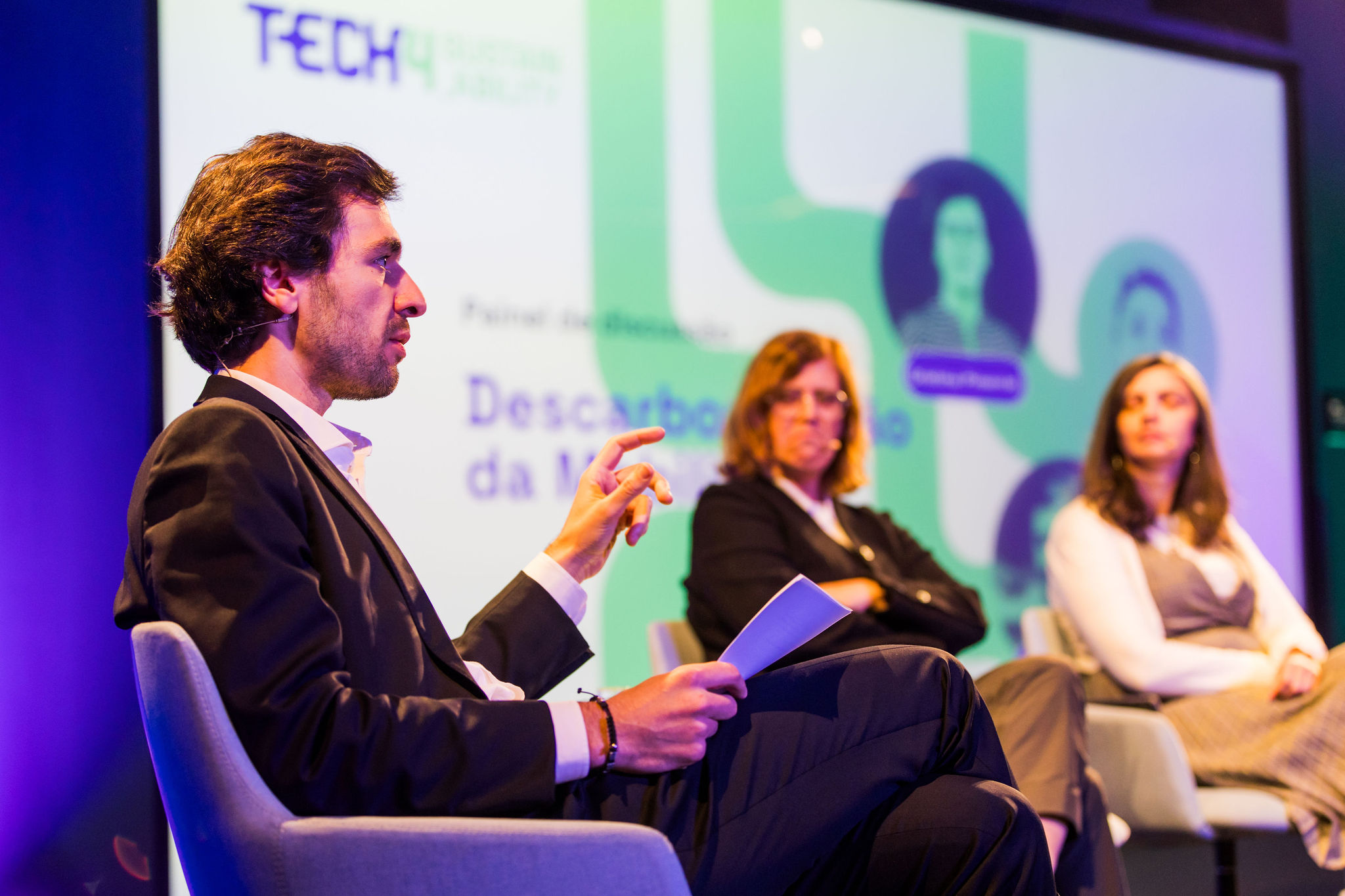
“Better Mobility” was the theme of the third TECH4 Sustainability conference, concluding a three-part series aimed at clarifying scientific and technological language by showcasing practical applications in the city context.
The Porto Municipality has reinforced its commitment, first made in 2022, to achieving carbon neutrality by 2030. As part of this effort, TECH4 Sustainability has fostered discussions on the challenges and solutions for public transport, focusing on providing a more sustainable, efficient, and functional mobility offering for residents and visitors alike.
Urban mobility is not solely about moving from point A to B; it also encompasses residents’ quality of life, pollution reduction naturally promoting a circular economy. This conference explored solutions that have the potential to expand and enhance the accessibility of the public transport network, alongside initiatives aimed at transforming Porto into a more environmentally friendly city, where citizens can travel safely and efficiently.
High-speed mobility was also a key discussion point, as Porto is integrated into the national investment plan for 2030, which aims to connect Portugal’s largest cities.
“We are witnessing a mobility paradigm shift, and the city of the future will be more people-centred.”
These were the opening words of Filipe Araújo, Vice-President of Porto City Council. He further stated, “We are bringing to life what will happen in the next decade— a transformation on a scale we have not seen for a long time. When we consider why there are more cars and congestion, we must remember that alternative mobility solutions were not provided.”
To address this, the Municipality is implementing infrastructure to support new urban mobility formats, contributing to the goal of carbon neutrality. As part of this strategy, the Rede 20 project was introduced, aiming to reclaim public space for citizens while promoting healthier and more sustainable modes of transport.
Cecília Silva, a professor in the Civil Engineering Department at FEUP and Director of CITTA – the Research Centre for Territory, Transport, and Environment, presented the BooST project, designed to develop a technical roadmap for encouraging bicycle use in the city. “This project aims to equip municipalities with the necessary tools to develop bicycle-friendly strategies,” she explained. “It is not enough to say that people do not use alternative transport. We must ask why, and the answer is quite simple: many have no other option,” she added.
Sustainable and Green Mobility
Porto’s transformation is being driven by initiatives that integrate technological innovation and sustainability, promoting eco-friendly transport alternatives. In a discussion moderated by André Brochado (Advisor to the Mayor of Porto), Cristina Pimentel, Director of STCP, highlighted that “STCP will continue to be the backbone and the leading road transport operator in Greater Porto.” She further stated, “We will bring an investment plan adapted to this new reality, with a strong strategy for the company’s decarbonisation, modernisation of the fleet, and ongoing operational innovation.”
With an investment of approximately three million euros, STCP aims to acquire next-generation electric buses and implement charging infrastructure at strategic points across the city, ensuring the efficiency and autonomy of this new fleet.
“Wherever high-speed rail has been implemented, it has completely transformed countries—economically, in terms of territorial cohesion, and in how people move.”
This was how Rui Calçada, Director of FEUP, summarised the impact of high-speed mobility, one of the conference’s key topics. He emphasised that “high-speed mobility is already being implemented, and it is only a matter of time,” highlighting the importance of ensuring that investments deliver tangible benefits for society.
In the same panel, Susana Bettencourt from Porto City Council’s Urban Planning Department noted that constructing a high-speed rail line in Porto represents a significant transformation not only for the city but also for the entire country. “Porto is working to capitalise on this project. This is a major opportunity, and we must seize it. It will reduce car dependency and likely enhance new transport connections,” she stated.
The final discussion focused on “The Role of Mobility in Achieving Carbon Neutrality in Future Cities”, addressing digital platforms, infrastructure, and new mobility services designed to drive urban decarbonisation. Speakers included Sandra Melo, R&D Coordinator for Mobility at CEiiA, Pedro Barradas from ARMIS Group (a company specialising in digitalisation and transport decarbonisation), Margarida Pina from BEN4US (a CEiiA spin-off focused on enhancing mobility services), and Mafalda Mendes, Scientific Coordinator at Herbi.
Showcasing the impact of academia and tech companies on urban sustainability
Since july, TECH4 Sustainability has hosted three conferences— “Greater Circularity,” “More Clean Energy,” and “Better Mobility”— with a total of 158 participants. Additionally, 13 videos have been produced and are available on the initiative’s website, and white papers detailing key conclusions will be published soon. The “Better Mobility” theme aligns with BE.Neutral, a project funded by the Recovery and Resilience Plan (Agenda for Carbon-Neutral Mobility in Cities), in which Porto Municipality is a partner.
TECH4 Sustainability is an activity led by Porto Municipality, coordinated by Porto Digital and the Directorate for Carbon Neutrality, in collaboration with the Faculty of Engineering of the University of Porto (FEUP). As its first cycle concludes, the activity highlights not only its significant achievements but also its commitment to bridging scientific and technological innovation with the community. By integrating sustainability into the city’s daily life, it fosters active engagement from technical and academic experts, local entities, and citizens.